.jpeg)
Single Neuron
EcoHere AI
Submitted
May 22, 2026, 6:16 AM
Last Updated
May 22, 2026, 6:16 AM
Project Links
Problem Statement
The Problem: The "Reactive" Trap of Conservation Protecting ecosystems is a battle against time. Millions of acres face illegal logging and poaching, but current methods are fundamentally broken because they are reactive. The Latency Gap: Monitoring relies on delayed camera traps and scheduled patrols. By the time rangers discover a felled tree, the crime happened hours prior. Rangers collect forensics instead of intercepting active threats. Visual Surveillance Fails: Drones and cameras are crippled by dense canopy cover, line-of-sight limits, and nighttime blindness—exactly when illegal activities peak. Impossible Scale: Forests are too vast to patrol 24/7. Manual observation is expensive and leaves massive blind spots. The Bottom Line: There is a fatal delay between a forest threat and human intervention. Without a real-time, non-visual early warning system, we cannot stop ecosystem destruction—we can only record it.
Solution & AI Usage
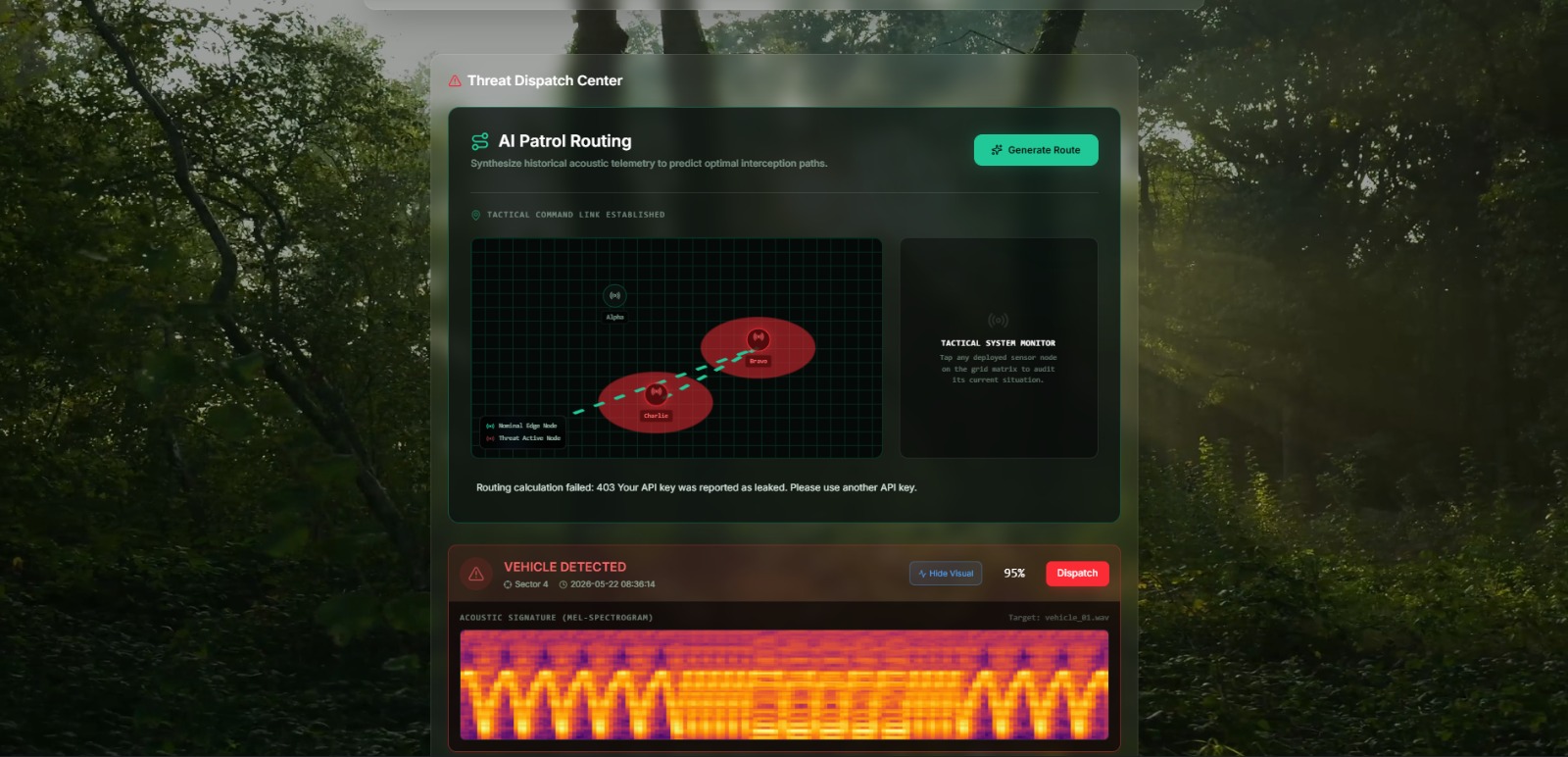
We built EcoHear AI on a Hybrid Edge-Fog-Cloud architecture for low-bandwidth forests. 1. Edge (React):** Captures audio in 4.5s "Tactical Pulses" via Web Audio API to conserve bandwidth. 2. Fog Node (FastAPI): Processes audio offline. We use Google YAMNet to extract acoustic embeddings, chosen for its efficiency with environmental sounds. A Random Forest classifier, balanced via SMOTE to prevent overfitting on rare poaching sounds, accurately detects threats locally. 3. Cloud (Gemini 2.5 Flash API): Verified anomalies trigger an uplink to Google Gemini. We chose Gemini Flash for its ultra-low latency and multimodal reasoning to dynamically generate tactical interception routes for rangers.
Full Description
EcoHear-AI: Intelligent Acoustic Monitoring
The Problem
Monitoring biodiversity is critical but traditionally relies on manual observation. Forests are vast, manual tracking is expensive, and endangered species are hard to spot. Consequently, critical species often decline before researchers even notice.
Our Solution EcoHear-AI automates environmental monitoring using artificial intelligence. By analyzing continuous audio data from forest environments, our platform detects wildlife sounds and illegal activities in real-time, providing actionable conservation data without needing a physical human presence.
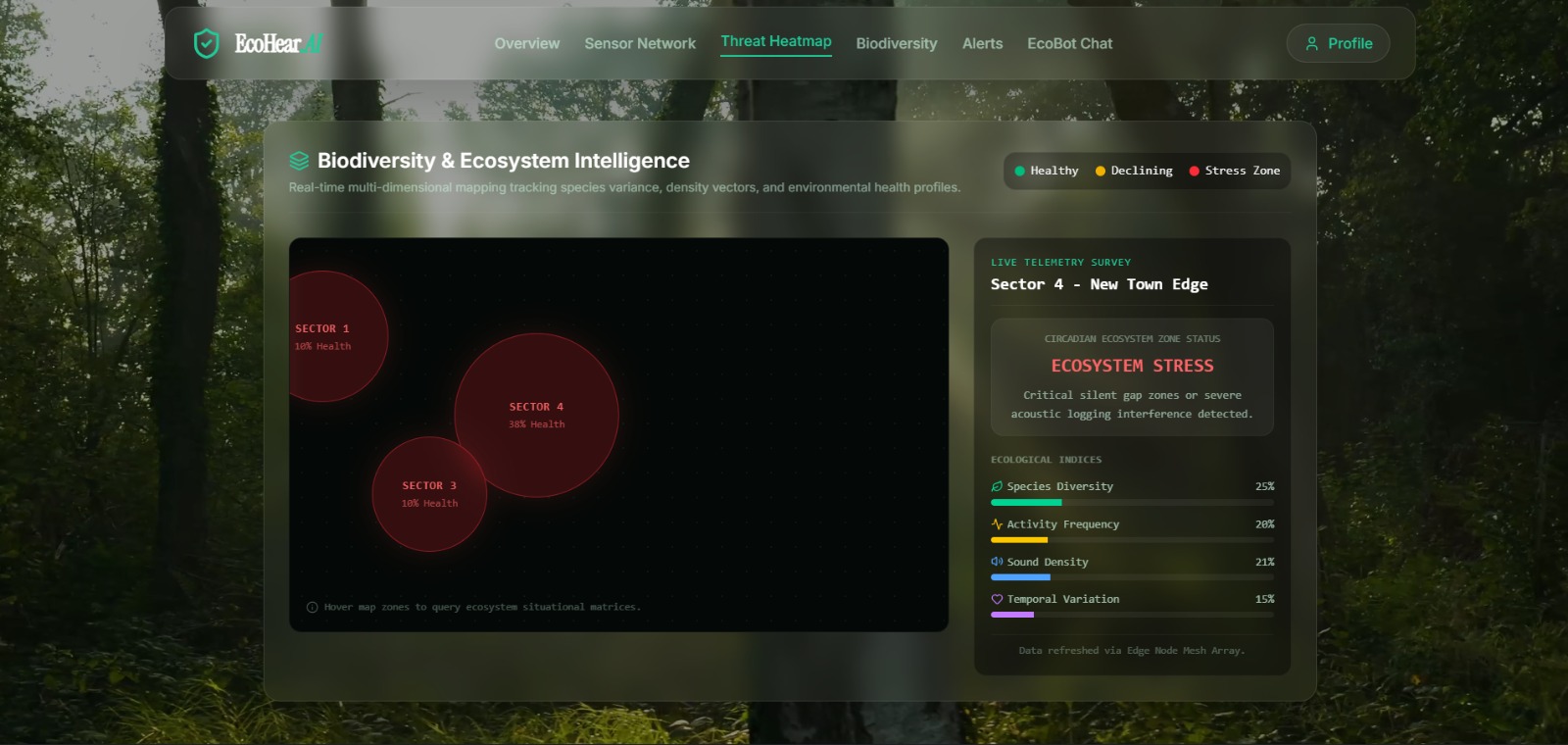
Key Features Intelligent Audio Processing: Machine learning models identify specific animal calls and anomalous noises (like illegal logging). Real-Time Dashboard: Translates complex acoustic data into visual trends and instant alerts. Scalable Tracking: Processes continuous audio streams from remote sensors to map ecosystem health.
Architecture Frontend: Responsive dashboard for clear, intuitive data visualization. Backend: Robust server infrastructure handling concurrent audio uploads and data routing. ML Engine: The core model, trained on diverse environmental audio to classify acoustic patterns. Database: Scalable storage for historical logs and analysis results.
Challenges Conquered
Noisy Data: Filtering out background interference (wind, rain) to isolate relevant acoustic markers was a major hurdle we had to solve in our processing pipeline. Latency: Optimizing the data flow to ensure the engine could process audio and update the client dashboard in real-time without bottlenecks.
Key Learnings We mastered building end-to-end machine learning pipelines, ensuring seamless synchronization between the client interface, server environment, and predictive models. Ultimately, we learned how to directly apply technology to overcome human limitations in environmental conservation.
Tech Stack
Screenshots
4 attached
.jpeg)